• 1 Apr

    inspirationDesigners, we have a problem. It seems we have forgotten how to be creative.

    It is true, the very nature of what we do is based on creativity, however more often than not we tend to be swept away by the latest trends or “what’s hot” rather than seeking out fresh inspiration.

    “A wise man makes his own decisions, an ignorant man follows public opinion.” – Chinese Proverb

    There are several reasons for this creativity block in which we are suffering from and in this article I’ll list some of these as well as alternatives for where to find appropriate sources of inspiration.

    Direct vs. Indirect Sources of Inspiration

    As designers, we are creative– we have to be. Even creative people need inspiration. So the question is, where do we look for inspiration? Herein lies the problem. If you’re like the majority of web designers, you probably depend upon direct sources of inspiration. However, more thought should be given to indirect inspiration; it is the key to developing new and original ideas.

    Direct Source: Any source of inspiration that is directly associated with the graphic design field, often showcasing published design work. Examples include CSS Galleries, HOW Magazine, Graphic Design Annuals, any published design work, magazines, books, etc.
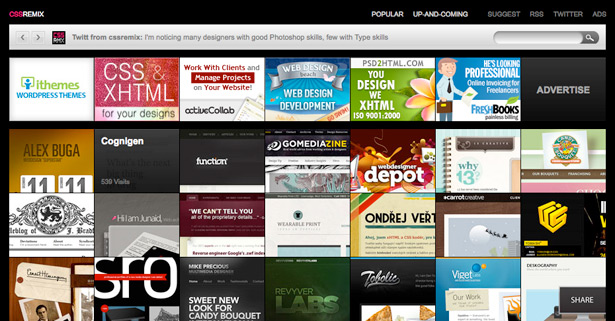
    CSS Remix


    Indirect Source
    : Any source of inspiration that is not directly related to the graphic design field. Typically these sources can be considered “outside the box” ideas. Examples include objects in nature, art, photography, history, etc.

    Using direct sources of inspiration often leads to duplication. Aside from copyright violation, attention should be given to the overuse of the so-called “web 2.0” effects (reflections, gradients, glossy interfaces, beveled edges, etc.). These effects are great indeed, but haven’t you noticed that everyone uses them. They’re not original anymore. If you frequent CSS and other design galleries, you’ll notice that many of the websites featured are very similar in concept. This is not good! However, I am not condemning such galleries, because they are useful. They are great inspiration. Wait, what? – didn’t I just say not to use them as inspiration? Well, not exactly.

    The key is to let design galleries and other websites inspire you to design, not inspire your design.

    Please read the above statement again. Good, now do it again.

    When viewing enormous compilations of great websites, it is easy to get excited and inspired to design. You will experience designer euphoria, where your creative juices begin to flow and you feel as if you can design the world. When you reach that point, stop! Do not make the mistake of spending too much time and effort browsing through what has already been done. If so, your inspiration changes to duplication, which should never be desired.


    The Nature of Business

    Clients can be our best friends or our worst enemies. We have all experienced it; your client wanting to defy all of your knowledge and control the entire creative process. They see their competitors’ websites and want exactly the same thing “but better”. The problem is that they have a uninformed, preconceived notion of their website and neglect to consider the many other factors in building a website.

    You must educate your client so that they may understand your design decisions. Then, and only perhaps then, they will understand the value of your design.


    No time for creativity on tight deadlines

    If you are working in the industry for a large company or even a small business, you will always be pushed by the clock and the pocketbook. Herein lies another problem; creativity takes time and you can’t rush a good idea.

    This will never change. Businesses are driven by money and we all know that time is money. However there are a few things we can do to expedite our creativity to meet these tight deadlines without hindering it. At the end of this article I have listed several creative exercises to help inspire some fresh creativity. Many of these are quick, fast-paced exercises that will likely take less time than it does to browse through a design gallery, so try them out and give them a chance. Hopefully, you will now understand that we do in fact have a problem. So, how do we fix it?


    Start by getting off your computer

    Finish reading this article first, then get off your computer. Your computer is not a creative machine; it does not have a brain and it cannot design for you. It is simply a tool; do not depend on it for creativity.

    Please leave your computer, take a short break, tell a small white lie to the boss if you must and get out! Take your sketchbook with you. Oh yes, if you have a camera, take that too. Whether it is something specific or simply just a refreshing look on life that you discover while you’re off your computer, you can use it to inspire your creativity.


    Browse Walmart or The Local Hardware Store

    Stores are full of unique and interesting objects and machines. There are endless possibilities for inspiration if you know where to look. Innovation in many products can be discovered if you simply take the time to discover them. For example, take a look through the kitchen appliances section of Walmart or any other store. Really take a close and hard look at the design of these appliances, their unique shapes, their easy to use interfaces, even how they are displayed on the shelf.

    There are several obvious comparisons that can be made between a website and an appliance. A blender, for example, has a unique design, some with bright colors, others with black and white. They sport elegant curves and shapes. They all have a “dashboard” of controls, cleverly designed for ease of use.

    Next, venture into the paint section. It is color inspiration heaven. Paint cards are organized by color and often contain a range of shades of each color (particularly helpful for a monochromatic color scheme). Mix and match different cards, find some interesting color combinations, then stick them in your pocket and use them when you get back to the office.
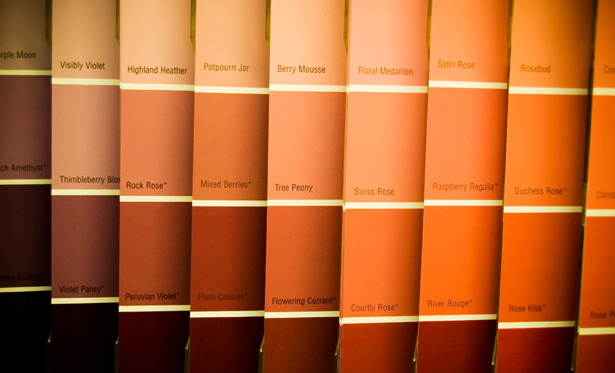
    Paint Cards

    Now head to the grocery aisle. Pay particular attention at how the products are arranged on the shelf. There really is an art and science to it.

    Anyone can find inspiration in a store and you can do your household shopping all at the same time. How’s that for multitasking?


    Explore Natural Beauty

    Go to a park, take a walk, wander into the woods or just simply take a blanket outside and lay on it. Whatever the method, get away from your routine. Find something that sparks your interest, catches your eye or strikes you in a particular way. Take a picture or sketch of what you see.

    Of course I am not telling you to simply find a flower or tree that you like and use it directly in your design. Instead, try to figure out what it is that you find so striking, maybe it is its color or shape, or even texture. Then transfer those elements into your design. Don’t be afraid to take a sample back to the office and scan it into Photoshop.


    Art History

    Formally trained in graphic design, I had my share of art history classes. I couldn’t begin to count the times that I have used a painting or sculpture as inspiration in my design work.
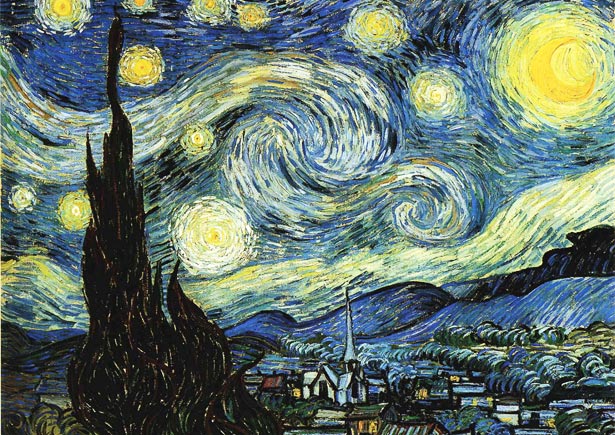
    Starry Night - Vincent Van Gogh
    Starry Night, Vincent Van Gogh, 1889

    Modern art movements such as Cubism, Abstract Expressionism, and Impressionism serve as excellent sources of inspiration. Even earlier forms of art such as Roman and Greek will suffice. Painting and sculpture can be applied to web design as well. It really is all the same, it is design, whether on a canvas or on a computer screen. Artist’s make color and layout choices and decide how they want the user to view their masterpiece by controlling the eye path with contrasting elements just the same as a web designer does.


    Don’t Forget To Use Your Imagination

    I’ve mentioned several ways in which you as a designer can seek out new and fresh inspiration, but the most important thing you should take away from this article is to not forget to be creative and use your own imagination. Be extraordinary, not ordinary.

    I challenge you to break the design cycle, explore uncharted territory and be original. Go beyond what has been mentioned in this article, seek out your own unique inspirations. Anything can inspire you if you will just let it.


    Creative Exercises: Try these for your next project

    Below I have listed and briefly explained some quick exercises to inspire “outside the box” thinking for your next project. Keep in mind that some of these will work for you and others may not. Don’t limit yourself to these. Think of ways to spark an idea that work for you, then share them with us in the comments section of this article.


    Quick Capture Photo Session
    Pick any place or area inside or out. Your desk will be a great place to start. Grab your camera and a stop watch. Give yourself 30 seconds to snap as many shots as you can of anything in the area that you have chosen. Do not concern yourself with taking a well-composed photograph- just think “rapid-fire.”

    Once your 30 seconds are up, upload the photos to your computer and see what you have. This exercise forces you to look at a space or area in ways in which you never have before. Browse through these photos and select a few that are particularly interesting to you; Store the others in a folder for use on another day.

    Print the photos that you have selected and paste them in your sketch book. Use them on your current project or save them for another one.


    Get OBJECT-ive
    This is a simple one. Find an object, large or small, something you can see from all sides. Place this object in sight of your desk, or on it if possible, as you are designing and limit yourself to designing around this object.

    Placing limits on a task forces creativity because it doesn’t allow you to choose the expected. It it forces you to think outside the box to arrive at a solution. Freedom restricts creativity.


    Webster-Mania

    If you’re a strictly visual person, this one may not work for you because it involves a dictionary and words. Open up a dictionary, randomly select a word and then try to formulate ideas incorporating this word. You’d be surprised how well this works. The concept is again is based on the principle of restricting yourself from the obvious. There is nothing like restrictions to get you thinking.


    Written exclusively for WDD by Michael Shelton. Michael is a freelancer web designer and runs his own website at Michaeladesigns.com

    What other methods of inspiration do you use in your designs? We’d love to hear from you, please share with us in the comments’ section below.

  • 59 Comments »

     
    #1
    Michael
    April 1st, 2009 at 8:42 am

    Great Article!


    #2
    Iñigo
    April 1st, 2009 at 9:05 am

    Wow dude! Just reading through this article got me all pumped up. Very well said. A fresh observation of the environment can give you a breakthrough! Thanks and cheers!


    #3
    Bogdan Pop
    April 1st, 2009 at 9:13 am

    I think that nature and art galleries are the best way to get inspired. I always take a screen of everything I think it is interesting and good for color schemes.


    #4
    Andrew Wilkinson
    April 1st, 2009 at 9:31 am

    This is a great article, you were absolutely SPOT ON with “Design Euphoria.” I find that looking at other people’s work always motivates me to design.

    Great tips on creativity too. :)


    #5
    Creamy CSS
    April 1st, 2009 at 9:32 am

    yes, but we can use direct source of inspiration (css galleries e.g.) to see how indirect inspiration (nature for example) can be applied in web design ;) but I’m totally agree with you,.. :)

     
    1 Reply
     
    #6
    2ks - Web Design Cornwall
    April 1st, 2009 at 10:15 am

    I like the ‘webster-mania’ idea. I’m not a hardcore designer, I work more on the strategy / technical side but I use a similar technique when exploring clients’ brand value in brainstorming workshops.


    #7
    idale
    April 1st, 2009 at 10:19 am

    Wow, this is a really great piece. So many obvious points which one often forgets when we’re stuck behind our machines.


    #8
    Irene Demetri
    April 1st, 2009 at 10:44 am

    Great article!


    #9
    Geoffrey Gordon
    April 1st, 2009 at 11:04 am

    Brilliant Article, and just what the doctor ordered, sometimes i tend to spend too many hours browsing for new ideas and concepts which can be quite mind numbing, I always find that when i step away from the bow the ideas just flow. Also I found that drawing the website layout before going to the PC tends to help with inspiration enormously.
    Great Article!!!


    #10
    Realizzazione Siti Web Bologna
    April 1st, 2009 at 11:04 am

    Great Post!
    Sometimes nature is the best inspiration source…


    #11
    Ed
    April 1st, 2009 at 11:48 am

    I thought this was going to be an April Fools. Instead it was a great article! Way to buck the trend today…


    #12
    insic
    April 1st, 2009 at 11:55 am

    thanks for the tips. awesome article.


    #13
    Rob MacKay
    April 1st, 2009 at 12:31 pm

    Excellent article

    I think another issue for non-creativity is there are a lot of “do’s and don’ts” especially within web design, and I think people can feel caught by them. When seeking inspiration they get it from the people they believe to be better than them or more successful – when really they are just different people.


    #14
    Liam
    April 1st, 2009 at 12:57 pm

    Creativity in web design dropped with the release of word press.


    #15
    Web Design
    April 1st, 2009 at 2:55 pm

    Great Article, It’s much better to put your own slant on things and you can really get that from indirect inspiration as you are free to let your imagination take over and go from concept to finished without the rigidity of something that is already formed.

    I covered an indirect approach on this last week which might be an additional help for designers – http://multilayerdesign.com/blog/design/creative-inspirations-from-design-and-visualisation/

    Cheers

    Kev


    #16
    Dawson
    April 1st, 2009 at 3:00 pm

    Enjoyed this article thoroughly. The exploration of creativity and how one coerces it to appear amidst the hustle and bustle of a regular business day is a fascinating one for me. Will be trying out some of the exercises in creativity on this list (for sure the dictionary one…words are my muse).


    #17
    Sebastyne
    April 1st, 2009 at 3:07 pm

    Thank you for this. I work in bridal design and occasionally “get ideas” from bridal magazines. It’s not a good, as the dresses are pretty much the same ol’ same ol’. Every time I design something after looking at the mags, I get bored just looking at my designs, let alone wanting to actually make them. The best work I do is when I try to ignore the trends and I consciously try not to pay attention to what is “in” and what is “out”.


    #18
    Robin Cannon
    April 1st, 2009 at 4:14 pm

    Couldn’t agree with you more. I try to use as much offline inspiration as possible.

    CSS galleries and the like are all very well, but they can easily lead to derivate work. A large part of that is, I think, that it makes us automatically think about our design in the context of the technical limitations of the web. Sure, at some point those issues will have to be addressed with any design, but it’s far better to develop initial concepts without already being limited by such considerations. Many of the best and most inspiring web pages are ones that, well, don’t really look like web pages! Where clearly their inspiration has come from elsewhere.

    I find a scrapbook to be a really helpful tool. I keep a large book and every time I see a cool cutting, photograph, image or font I try to keep it and put it in the book. That book is invaluable, because whenever I have a new project it acts as a great catalyst for creativity. I’ll flick through it at random and, even if I don’t end up using anything from it as a direct inspiration, it gets me thinking about thinks more widely than merely web related technology and design.


    #19
    PoLR
    April 1st, 2009 at 4:50 pm

    Some really great tips in this article. I favour getting off the computer and away from the desk and going back to pen and paper – amazing the different viewpoint it can give you!


    #20
    Patrick
    April 1st, 2009 at 4:50 pm

    “…in which we are suffering from…”

    Pretty interesting article overall but that syntax above makes me cringe. You really shouldn’t just string words together. You should know the function of every word you speak and write. Do you really speak that way? I doubt it. Intuitively, most people realize that a prepositional phrase should only have one preposition, not one at the front and one at the back.

    Try this: “…from which we are suffering…”

    One preposition at the beginning of the phrase. “…in which…” is nonsensical in this instance and you ended the phrase with the appropriate preposition anyway; it was just in the incorrect place.

    Ultimately, young writers should focus on their content (as you’ve done quite well) as well as focus on clear and concise communication of that content. Don’t make your sentences overly complex in an effort to sound smarter. No one gains credibility that way. Rely on your ideas and your content.

     
    2 Replies
     
    #21
    bs kishore
    April 1st, 2009 at 5:14 pm

    You have hit the nail on it’s head.Nice and worthy post.By the way,the points stated
    have an universal appeal,in the sense that,it can be used for any creative endeavour.


    #22
    Kayla
    April 1st, 2009 at 5:45 pm

    Good article. I try not to depend on CSS galleries, and things like that, although sometimes I still do. A lot of good tips and ideas, thank you!


    #23
    BigFoot at Ford
    April 1st, 2009 at 5:57 pm

    Article is so-so, but the author, according to his own website, is a college student hoping to graduate in 2010? He writes he is “formally trained in graphic design” which sounds like he is out of school, but his website says otherwise. But then article says he is “a freelancer web designer.” His website says “I do occasionally take on freelance projects when I have a bit of extra time (I’m in college after all).”

    What is the real story here? Can someone respond please so that we can gauge his expertise please?? It matters. Some of us pros in the industry want to know that we are reading from people with some solid experience and skills. Otherwise, we feel cheated.

     
    1 Reply
     
    #24
    steve
    April 1st, 2009 at 6:12 pm

    The difference between web design and other creative endeavors like painting is that design is based off of more than unfiltered creativity. It has form, patterns, principles, as well as limitations. Depending on the type of site you’re creating, there are certain design patterns that will play a role in the work you do.

    I have gotten some of my best inspiration from exercise as there are endless amounts of thoughts sitting in all of our heads, we just need different ways of clearing our minds and bringing them out. You bring up some good avenues for alternative exploration, but saying to cut off from building upon some of the great designs being put out is authoritarian and unnecessarily extreme. The bevels, rounded edges, blah blah 2.0 crap is only a trend, just like pixel fonts and abstract fractals was a trend a few years ago. The design will progress itself, you can do your part to move it forward… Just as grunge vector illustrations like those seen on this site will be tired within another year.

     
    1 Reply
     
    #25
    Gaurav
    April 1st, 2009 at 7:29 pm

    Must for creative people!! will help us a lot. Delicious :)


    #26
    Samuel
    April 1st, 2009 at 8:39 pm

    I agree completely. What I do (force myself) when looking at the CSS Inspiration Design websites is NOT to look at a great website too long. What i find myself when i do that is sitting in front of my PC trying to remember exactly what that ‘cool’ website looked like rather than try to create on my my own. Keeps my work fresh, not fabricated.

    Great article!


    #27
    Logo Design guru
    April 1st, 2009 at 10:26 pm

    Creativity can be something that is sometimes hard to come by. Even creative people have blocks once in a while. I think that the key is to surround yourself with things that inspire you.


    #28
    Derek Underwood
    April 1st, 2009 at 11:59 pm

    Mike,

    Nice article.

    http://www.37signals.com often blogs about how inspiration outside the web is important for creativity to flourish.


    #29
    2creativo
    April 2nd, 2009 at 3:06 am

    Great article with really great tips.

    Congratulations!

    Relink from piscolabis:
    http://piscolabis.2creativo.net/post/92070636/breaking-the-design-cycle-get-creative-to-be-creative


    #30
    Le Minxxx
    April 2nd, 2009 at 5:15 am

    It’s sooo true.

    Sometimes we get sucked into this mundane routine that our spark fades.

    WE all definitely need to let loose every so often.

    Whether it be to re-inspire ourselves, re-charge our batteries, or re-invigorate that passion + drive we have deep inside us – you need that breather.

    Awesome article!


    #31
    Michael Shelton
    April 2nd, 2009 at 6:25 am

    Glad to see you guys have enjoyed the article. Since the writing of this article, I ran across a book that is great for sparking creativity.

    Caffeine for the Creative Mind: 250 Exercises to Wake Up Your Brain, by Stefan Mumaw and Wendy Lee Oldfield. Check it out on amazon: http://www.amazon.com/Caffeine-Creative-Mind-Exercises-Brain/dp/1581808674

    It lists some very wild and creative ideas to “Wake up Your Brain.” I do not own the book, however I spent about 30 minutes in the bookstore flipping through it. Some exercises are a bit far fetched, but most will really help.

    Hope this helps!


    #32
    semblance
    April 2nd, 2009 at 11:08 am

    I actually had a similar thought just yesterday. Lately I have been concentrating too much on technical stuff and I lack a bit of creativity. I then decided to go on Saturday and take advantage of spring with my camera.
    Thank you for reminding me of the outside of the box. Your second exercise is basically what artist start doing at the end of Impressionism that led to Cubism. It obviously worked, if you look at the amazing patterns and shapes on the paintings of that time.


    #33
    Dave Klein
    April 2nd, 2009 at 6:25 pm

    Great article! Sometimes I struggle with creative blocks and this is a nice reminder of how outside forces can inspire creativity.


    #34
    4psd
    April 2nd, 2009 at 10:47 pm

    realy nice!


    #35
    Rafael
    April 3rd, 2009 at 5:25 am

    Great Article! Great content, BS Lean…


    #36
    Elliott
    April 3rd, 2009 at 5:48 pm

    Nice article.

    I’ve got a Border Collie, who I take twice a day to the park, five minutes from where I live and get some great inspiration.


    #37
    rob
    April 3rd, 2009 at 8:57 pm

    Great thoughts!
    Practical and usefull ideas. Thanks.


    #38
    enque
    April 14th, 2009 at 4:33 pm

    Really Great article. I always try to start every project with a pencil and sketchpad, even on tight deadlines. So getting off the computer is important so I don’t dive straight into projects without a little planning. I find that if it is too much to take my own photographs I draw inspiration from the ones I find on Stock Photo sites. Just like the dictionary exercise I just write down some words relating to the project and do a search on these sites and see what images they throw out.
    Thanks again for the tips.


    #39
    Ching Ya
    April 16th, 2009 at 4:53 am

    I’m not a pro designer, yet very fascinated with everything that relates to it. Creativity is a major factor in this case. I find this article very much related to what we’re doing in our daily lives, no matter what fields we’re in. I’m a blogger, so constantly looking for inspirations, stories, and being a good story teller, always challenging. Will try to apply these points provided and I’m sure, it’ll help us all to see things in a wider perspective, and hopefully, generates some unexpected ideas, good ones.

    @wchingya
    Social Media/Blogging


    #40
    MPicasso
    April 22nd, 2009 at 10:23 pm

    A book called “Extra Ordinary” works for me. Great tips.


    #41
    Enzo
    May 26th, 2009 at 11:08 pm

    WOW! Thanks!


    #42
    Muneef Hameed
    June 3rd, 2009 at 5:45 pm

    superb and well said, thanx!


    #43
    Aneliya
    June 4th, 2009 at 12:42 pm

    Well, I find this article so useful and inspiring, so there is nothing else that I can say! GOOD JOB and I love this site and the reviews you people make!!! Keep ON!!!

    and GOOD LUCK!


    #44
    dimors
    June 7th, 2009 at 12:22 pm

    nice.. cool .. beauty.. i don’t think there is a word to explain the value of what u wrote .. i like it and it’s very important not only the designs but the idea also thanks a lot


    #45
    Shailendra
    June 8th, 2009 at 11:02 pm

    Can not explain how useful this article is for person like me who works more on technical on business developments side and goes blank when has to contribute for design part.

    All tips mentioned in this article is really a breakthrough for me.


    #46
    TJ @ Smart Blog Tips
    June 9th, 2009 at 2:35 pm

    Nice and inspirational article. Thanks

    Regards
    TJ


    #47
    karthik
    July 1st, 2009 at 5:58 am

    Well said Superb article ! Great inspiration thanx a lot.


    #48
    Nashville Web Design Guy
    July 15th, 2009 at 12:03 am

    Great article. I especially found the exercises to be a great idea (although I haven’t tried them out yet). It’s just so easy to get stuck in the design rut and forget about the creativity that flowed while I was in school.

    @BigFoot at Ford, what does it matter if this guy is in school or not? It doesn’t. Does that make his points less relevant? Nope. I’d imagine that if he is indeed still in school, most of these techniques came from well qualified instructors and professors anyway. Sorry if you feel “cheated” by taking a few minutes to read a FREE blog post. Don’t be a hater bud.


    #49
    Lionel
    August 4th, 2009 at 3:49 am

    Thanks! very good approach


    #50
    Gail Pruitt Hall
    August 11th, 2009 at 6:32 am

    I like the advice about looking for art and design in unexpected places. Enjoyed the photos.


    #51
    mauco
    August 11th, 2009 at 2:38 pm

    Great article. It has really made my day. Thanks for the tips


    #52
    jmatt
    August 11th, 2009 at 5:30 pm

    Awesome article!! I especially loved the idea of restricting creativity because I tend to A. get overwhelmed by limitless inspiration and B. get too literal and have a hard time thinking a outside the box. Thx :)


    #53
    Amanda W
    August 12th, 2009 at 5:06 am

    This was an awesome read. Too many times I rely on the computer to give me inspiration when it should come from the root of my soul. It’s sometimes so easy to forget the good ole pencil and paper in this day-in-age.

    I also loved the idea of setting boundaries with your projects because having limitless possibilities can be very overwhelming, especially when you’re working on your own stuff. Lucky to read I’m not the only one.

    I’ll be referencing this one for awhile. Great reminders!


    #54
    Tom Bradshaw
    August 12th, 2009 at 7:18 pm

    This article made me smile, couldn’t be closer to the truth. I totally agree the computer is a tool, design comes from a person. In an ideal world I would spend days getting a design perfect but the nature of my work just doesn’t allow that, you have to accept some neccessary evils if you like.


    #55
    Web Design Kent
    November 3rd, 2009 at 2:56 am

    The lunchtime walk of the dog solves many a problem, step away form your monitor!


    #56
    howard stanley
    November 8th, 2009 at 9:52 pm

    I’m a theatre director.
    Here’s an idea from Keith Johnston (Impro and Impro for Storytellers):
    Preparation:
    Write a brief list with these headings:
    Shapes: (square, round etc),
    Colours: red, blue, green, yellow, black etc
    Textures: (rough smooth etc)
    Stand up from where you are and calmly look around your space
    Use the list to refer to as you walk or if possible, run (or turn if space is confined) quickly around where ever you are in order to locate each of the qualities on your list.
    Now comes the fun part:
    After completing your sequence run around the room yelling the wrong name for everything that you deliberately see. For example coffee cup becomes “rhino”, black becomes “yellow” etc
    Do this for a couple of minutes and do it fast – be aware of when you find yourself planning or trying to be ’smart’. The aim is to react spontaneously. You will probably be laughing at the absurdity of what you are doing and the bizarre things coming out of your mouth.
    After you have completed this activity, once again calmly look around the room noting your reaction to being where you are, experiencing what you see.
    It’s disorientating, fun and definitely takes you out of the square and out of your ‘planning’ mind.
    If possible do this with other people to increase the hilarity. You can mis-name each other’s clothes, colours etc as they will you.
    If it’s a workspace get permission or they’ll get the men in white coats. If it’s at home do this with the family/friends (young kids looove this kind of stuff)
    People who say “yes” have adventures and People who say “no” have more of the same. What do you say?


    #57
    Francesco
    January 11th, 2010 at 5:51 pm

    Thanks a lot.
    Your article is very useful
    Do you know designer Bruno Munari?
    His books are very interesting
    I don’t know if the book printed in Usa
    Grazie mille


    #58
    Ron Arts Web Design
    January 25th, 2010 at 1:33 pm

    This article is really awesome for creative people, going to be very useful..Thanks a lot!!!!!


    #59
    Webby Design Guru
    January 29th, 2010 at 2:46 pm

    Well written article! There are really some great points. Nice thoughts and ideas!!!

     
    Name (required)

    E-mail (required - never shown publicly)

    Web-site

    Your Comment (smaller size | larger size)

Home| Advertising| About| Contact

© 2010 All Rights Reserved