• 29 Jun

    12 Essential Rules to Follow When Designing a Logo

    Branding, Design, Logos

    Share


    The logo is the face of any brand — the very first impression — so its design is extremely important.

    When executed correctly, a logo is a powerful asset to your client’s brand.

    However, creating an effective visual representation of a brand requires much more than just graphic design.

    Like any line of work that involves a set of specific skills, logo design requires plenty of practice and experience for it to be successful; knowledge is definitely power for any graphic designer.

    For this reason, we have outlined 12 essential rules to follow in order to design an effective logo.

    1. Preliminary Work Is a Must
    Post Image

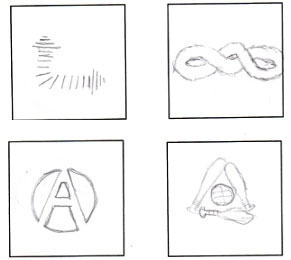
    Preliminary sketches are an important first step in designing an effective logo.

    These can be as simple as paper and pen drawings or drafts made using a vector program, such as Illustrator.

    The bottom line is that you compromise the final result if you rush, or skip, this step.

    Start with 20 to 30 sketches or ideas and then branch out to create variations of the original ideas.

    If nothing seems to work, start over and begin sketching new ideas.

    An effective graphic designer will spend more time on this preliminary work than any other step in the design process.


    2. Create Balance

    Balance is important in logo design because our minds naturally perceive a balanced design as being pleasing and appealing.

    Keep your logo balanced by keeping the “weight” of the graphics, colors, and size equal on each side.

    Though the rule of balance can occasionally be broken, remember that your logo will be viewed by the masses, not just those with an eye for great art, so a balanced design is the safest approach.


    3. Size Matters

    When it comes to logo design, size does matter. A logo has to look good and be legible at all sizes.

    A logo is not effective if it loses too much definition when scaled down for letterheads, envelopes, and small promotional items. The logo also has to look good when used for larger formats, such as posters, billboards, and electronic formats such as TV and the Web.

    The most reliable way to determine if a logo works at all sizes is to actually test it yourself.

    Note that the smallest scale is usually the hardest to get right, so start by printing the logo on a letterhead or envelope and see if it is still legible.

    You can also test for large-scale rendering by printing a poster-sized version at a print shop.


    4. Clever Use of Color
    Post Image

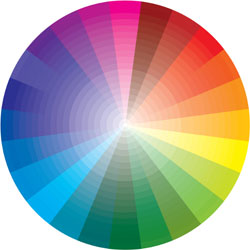
    Color theory is complex, but designers who understand the basics are able to use color to their advantage.

    The basic rules to keep in mind are:

    • Use colors near to each other on the color wheel (e.g. for a “warm” palette, use red, orange, and yellow hues).
    • Don’t use colors that are so bright that they are hard on the eyes.
    • The logo must also look good in black and white, grayscale, and two colors.
    • Breaking the rules sometimes is okay; just make sure you have a good reason to!

    Knowing how colors evoke feelings and moods is also important. For example, red can evoke feelings of aggression, love, passion, and strength.

    Keep this in mind as you try out different color combinations, and try to match the color to the overall tone and feel of the brand.

    Playing around with individual colors on their own is another good idea. Some brands are recognizable solely by their distinct color.

    For example, when you think of John Deere, you think of the “John Deere green” color, and this sets this brand apart from its competitors and, more importantly, makes the brand all the more recognizable.


    5. Design Style Should Suit the Company
    Post Image

    You can use various design styles when creating a logo, and to pick the right one, you should have some background information about the client and the brand.

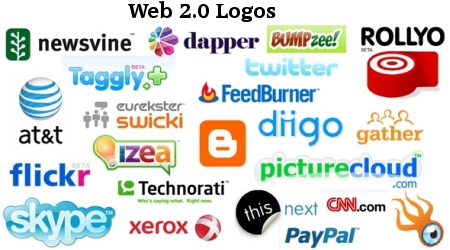
    A recent trend in logo design is the Web 2.0 style of 3D-looking logos, with “bubbly” graphics, gradients, and drop shadows.

    This style may work well for a Web 2.0 website or tech company, but may not be effective for other kinds of brands.

    Research your client and its audience before you begin your preliminary work.

    This will help you determine the best design style from the start and save you from having to return repeatedly to the drawing board.


    6. Typography Matters… a Lot!

    Choosing the right font type and size is much more difficult than many beginner designers realize.

    If your logo design includes text, either as part of the logo or in the tagline, you will need to spend time sorting through various font types — often, dozens of them — and testing them in your design before making a final decision.

    Try both serif fonts and sans-serif fonts as well as script, italics, bold, and custom fonts.

    Consider three main points when choosing a font to accompany your logo design:

    • Avoid the most commonly used fonts, such as Comic Sans, or else your design may come off as amateurish.
    • Make sure the font is legible when scaled down, especially with script fonts.
    • One font is ideal, and avoid more than two.

    Strongly consider a custom font for your design. The more original the font, the more it will distinguish the brand. Examples of successful logos that have a custom font are Yahoo!, Twitter, and Coca Cola.


    7. The Goal IS Recognition
    Post Image

    The whole point of creating a logo is to build brand recognition. So, how do you go about doing this?

    Well, it varies from case to case, but the goal with the logo is for the average person to instantly call the brand to mind.

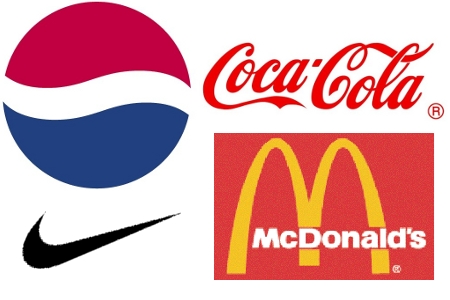
    A few examples of this are the logos for Coca-Cola, Pepsi, McDonald’s, and Nike.

    Just a glimpse of any of these logos is all you need to recognize the brands.

    The key to making a popular and recognizable logo is to combine all of the elements discussed in this article: size, style, color, typography, and originality.

    Overlooking any of these during the design process will impair the quality of your final design. Examine your own logo design and see whether it meets all of these criteria.

    A quick test to determine if your logo is recognizable enough is to invert it using any graphic design software and see if you can still recognize the brand. Additionally, you should mirror the logo and see if it’s easily recognizable in this state.

    Keep in mind that logos aren’t always seen head-on in real world situations, for example, on the side of a bus or a billboard that you drive by.

    Therefore, you should make sure to view your logo design from all angles and ensure that it’s recognizable from any direction before submitting it to your client.


    8. Dare to be Different

    To stand out from the competition, you must distinguish yourself as a designer with a distinct style. Rather than copy another design or style, be innovative and stand out from the crowd.

    So, how can you be different? Try breaking the rules of design and taking risks.

    Try a variety of styles to find the one that works best for your client. Try different color combinations until you find one that makes your design truly original.

    Have fun with the design program you use, and keep tweaking the design until you feel you’ve got it right.


    9. K.I.S.S. (Keep it Simple, Stupid)
    Post Image

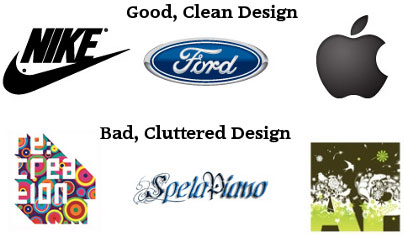
    The simpler the logo, the more recognizable it will be.

    For example, the Nike swoosh is an extremely simple logo and is also one of the most recognizable in the world.

    Follow the K.I.S.S. rule right from the start of the design process, when you are brainstorming ideas and doodling sketches.

    Often, you’ll find that you start with a relatively complicated design and end up with a simpler version of it in the end.

    Work the design down to its essentials and leave out all unnecessary elements.


    10. Go Easy on Effects

    Adobe Illustrator, Freehand, Photoshop, and other graphic design programs are extremely powerful tools and have many filters and effects that you can apply to your logo, but don’t get carried away!

    There’s a time and place for these powerful tools, but it is not necessarily to design a logo.

    Of course, playing around and seeing whether they enhance a logo is fine, but just remember that simplicity is key.


    11. Develop a Design “Assembly Line”

    To produce consistently high-quality logos, you need to develop your own design process, or “assembly line.” This should include the following steps:

    • Research
    • Brainstorm and generate ideas
    • Preliminary sketches
    • Develop vector designs
    • Send to client
    • Add or remove anything the client wants
    • Finalize the design and resubmit to client

    Although you may want to tweak the order slightly, you should follow these basic steps with each logo design.

    This will help you streamline your work, stay organized, maintain focus, and deliver better quality and more consistent results with each job.


    12. Use Other Designs for Inspiration Only!

    The last rule for designing an effective logo is quite simple: don’t copy other designers’ work! While there’s nothing wrong with being inspired by other designers, copying another person’s ideas or work is morally and legally wrong.

    Gallery websites exist that let you use vector art images free of charge, with proper attribution under the Creative Commons License, but I strongly recommend not going this route.

    These websites can be helpful for getting ideas during the brainstorming stage, but you’re better off starting your design from scratch and making it 100% original.


    Written exclusively for WDd by Jarkko Laine.


    Do you follow these rules when designing your logos? Why or why now? Please share your comments with us…


  • 87 Comments »

     
    #1
    Amara Poolswasdi
    June 29th, 2009 at 5:30 am

    “An effective graphic designer will spend more time on this preliminary work than any other step in the design process.”

    THANK YOU. Someone needs to forward this on to all Design 101 students. And to everybody who is paying for outsourcing for $20 “logo design”s.

    Keep up the good work WDD!


    #2
    Amy Shropshire
    June 29th, 2009 at 5:45 am

    Excellent advice! I remember that one of my favorite design instructors used to hang our work on the board and tell us to run by. If we could still recognize the brand, it was on the right track!


    #3
    bebopdesigner
    June 29th, 2009 at 6:08 am

    Brilliant piece of advice…Thanks for posting!


    #4
    Oliver
    June 29th, 2009 at 6:17 am

    awesome tips. It helps going over these before making a logo. Thanks a heap


    #5
    Sammy
    June 29th, 2009 at 6:28 am

    I concur. Great advice. I ‘ve recently adopted the first step put it into practice and wow, what a difference it has made.


    #6
    Ravikumar V.
    June 29th, 2009 at 7:55 am

    where is “digg” icon ??


    #7
    Walter
    June 29th, 2009 at 8:46 am

    No digg button for the time being due to some problems. I’ll reinstate it in the future.

    Thanks :)


    #8
    oxidizzy
    June 29th, 2009 at 8:10 am

    nice post again. Thanks!


    #9
    Mahallo Media
    June 29th, 2009 at 8:51 am

    Thanks for logo rules.


    #10
    AREA 1
    June 29th, 2009 at 9:08 am

    Thanks, it’s a very useful article. Great job!


    #11
    rociiu
    June 29th, 2009 at 10:09 am

    Good Post! It’s really helpful ! Thanks a lot!


    #12
    Gert van den Brink
    June 29th, 2009 at 10:25 am

    Great advice!

    It’s always good to remaind the basic rules. I’m currently working on some logo’s for some clients, this will certainly help.


    #13
    Nikola Ovcharski
    June 29th, 2009 at 11:32 am

    Thank you


    #14
    theamoeba
    June 29th, 2009 at 11:37 am

    awesome, thank you very much. :)


    #15
    Chris Lake
    June 29th, 2009 at 12:41 pm

    Neat post, though who the hell uses Comic Sans? ; )


    #16
    Webbo
    June 29th, 2009 at 12:51 pm

    Brilliant post and some excellet advice for us all to follow!


    #17
    Callum Chapman
    June 29th, 2009 at 1:00 pm

    Great article, I like the K.I.S.S rule ;)


    #18
    Martin Leblanc
    June 29th, 2009 at 1:26 pm

    I totally agree with this list although I think for companies which are primarely present online, they don’t have to pay too much attention to the black and white versions.


    #19
    Marta
    June 29th, 2009 at 3:02 pm

    Nice tips. Essential and helpful. :) I can also recommend an article about meaning of colors. It`s important what a logo designer want to say through colors. I`ve got also great article about logo design, but only in my language – polish. If anybody can it, I could give a link.


    #20
    BeyondRandom
    June 29th, 2009 at 3:25 pm

    great writes up, I really need to get a logo up and going now!


    #21
    tapevil
    June 29th, 2009 at 3:42 pm

    Thanks for share your point.It’s nice!!!


    #22
    maria
    June 29th, 2009 at 4:01 pm

    All these points are the basis of my work.
    At point number 5, it only changes the customer: in my case, it´s me.
    I started on graphic design in a finantial company in Madrid.
    Years later I changed my target and I became a digital artist.


    #23
    Ted Goas
    June 29th, 2009 at 4:24 pm

    Great points. Smashing Magazine had a recent post about logos too with some great points… like not using Stock Imagery in a logo.


    #24
    Jarkko
    June 29th, 2009 at 5:54 pm

    Thank you all for your great comments, we appreciate each and every one of your contributions!


    #25
    Piedmont
    June 29th, 2009 at 6:15 pm

    I like the “How to Create a Professional Logo” article at WDD much better, but thanks for this new article anyways. Always helps to refresh up on the basics


    #26
    Adam
    June 29th, 2009 at 7:52 pm

    Excellent advice there. I love the challenge of creating a logo but i often find that when I’m sitting there with a blank canvas it’s impossible to come up with something suitable. I’ll definitely take this advice into consideration next time.


    #27
    John G
    June 29th, 2009 at 7:59 pm

    I think this is a great article, with lots of useful tips, but at some point as an artist you can’t just follow a list of rules. You have to take what is useful to you and discard the rest.

    Like tip no. 1. Even though I’m very good at drawing, I will NOT sketch out logos, websites or pretty much anything, unless the customer is asking me for a drawing. I’m consistently able to visualize what I need and just start from Illustrator/Photohsop. You also mentioned this, but I just want to let other artists know that they are not beholden to a list of tips.

    Additionally, I most certainly will not make up 20-30 sketches or ideas. I think here it depends on your level of ability and your understanding of what the client wants. I’m consistently able to zero in on things with no more than 5 concepts. And 5 is a LOT for me. If you can do it with less, do so. If you need more, then do more. You’re not wrong either way.

    I don’t necessarily think that I or anyone should be spending more time in this part of the process than another. All artists have different ways of approaching things and different levels of talent, so you’re just not going to do things the exact same way as another. That’s ok for tutorials on Illustrator/Photoshop features, but we all have different creative processes, and it’s important that as artists we adopt the procedures that work best for US.

    Anyway thanks for the article, I think the rest of the tips were spot on, good job!


    #28
    e11world
    June 29th, 2009 at 9:02 pm

    Great Article! Always nice to remind designers what things to look for/do at work.


    #29
    Steve Nelson
    June 29th, 2009 at 9:28 pm

    We once created a site called the “orbituary” showing every lookalike logo that featured a tilted ellipse of some sort or another. You know the one. If you’re tempted to tilt an ellipse or are offered one by a graphic designer, run the other way. You might as well keep your default ring tone.

    As to the orbituary – we quickly ran out of server space!


    #30
    Marta
    June 29th, 2009 at 11:46 pm

    This is the link about meaning of colors. Short but maybe helpful for somebody. :)
    http://desktoppub.about.com/cs/colorselection/p/


    #31
    desarrollo web
    June 30th, 2009 at 12:03 am

    Great article! Thanks a lot!


    #32
    aledesign.it
    June 30th, 2009 at 12:38 am

    Great! Nice post e more words are correct! ;) a good way for make a good work!


    #33
    Phey
    June 30th, 2009 at 7:08 am

    great eleven steps for creating logo, well next step posssible get alot articles here :D ..


    #34
    TND webdesign
    June 30th, 2009 at 9:14 am

    Nice piece of article! :-)


    #35
    David
    June 30th, 2009 at 5:49 pm

    complementary colors ( the ones opposite each other on the color wheel, red and blue etc. ) can be good too. a good knowledge of color theory is very helpful, but rules were also made to be broken.


    #36
    Ezrad Lionel
    June 30th, 2009 at 11:47 pm

    This would be pretty obvious to anyone who is not retarded. How about some real advice?


    #37
    joel k.
    July 1st, 2009 at 1:19 am

    “An effective graphic designer will spend more time on this preliminary work than any other step in the design process”
    wow! you hit it in the head. good post, good info, keep it up:)

    lots of logos are good in b/w, but in color or gradient they are amazing.(McDonald’s, apple,)

    never be scared to use filters after your brand is established. (Ups, Microsoft, at&t,)
    if its for the internet only colorful will not be a problem(Google, Firefox,)

    if a client wants something that brakes the rules; that’s reason enough to brake’em.


    #38
    egoleo
    July 1st, 2009 at 4:29 am

    great tut. i enjoyed every bit of it as a newbie in graphics design. thnx dude


    #39
    Kit
    July 1st, 2009 at 2:06 pm

    Very useful, thanks!


    #40
    vasanth
    July 1st, 2009 at 5:07 pm

    hai! its so useful for me
    and thanks for the post !


    #41
    bulva Design
    July 1st, 2009 at 5:15 pm

    Sorry I don’t think this is good article. I’ve read similar kind of “12 Essential Rules to Follow When Designing a Logo ” really X-times. I kind of feel that the author don’t know all those things from his own experience but just randomly picked logo rules from the web around. There is nothing innovative and actually I think for beginners, these rules killing their creative process. It all depends on what are you designing logo for. Should it be crazy, web logo, business, complicated or simple etc..

    And the worst think I really hate in this kind of logo rules article is “7. The Goal IS Recognition”. There always Nike, Pepsi, McDonald’s, Coca Cola etc.. Jesus, I’m not saying these logos are bad, their are professional of course but these logos could be the worst you ever see and still will by recognizable because their are here for generations. You should use some fresh new logos for this purpose doing the same job not because there are here 100 years but because their are so clever. And there is so many peaces like that.

    Anyway… love this blog & P.S.: Who’s the article author? :)


    #42
    Adam Brewer
    July 1st, 2009 at 6:02 pm

    I expected this to be mostly self-explanatory and it kind of was, but it was still a very worthwhile read! Even experienced logo designers would do well to go over these points just to remind themselves of certain things. Always good to hear HCI terms like K.I.S.S as well – I remember learning that at Uni, it applies to almost everything!


    #43
    Dainis Graveris
    July 1st, 2009 at 11:48 pm

    great points and tips, i must agree – very essential tools, must know :)


    #44
    dinda27
    July 2nd, 2009 at 2:18 am

    Thank you for sharing
    I am a new member here in this art desgn.
    I’m still learning how to make a design, this is one of my new hobbies.
    I am happy to know you.
    Best regards.


    #45
    Rob Stathem
    July 2nd, 2009 at 11:54 pm

    The Best advice (in my opinion) is K.I.S.S.

    Too many times I’ve seen logos that are overly complicated and have too much detail that you can’t see. If you can’t see or identify the details in a logo, it’s not a good logo.

    Secondly, it helps to have key attributes or phrases in mind that distinctly identify the company name. For example, strong, durable, etc… I might convey a sense of “strong” in the typography or in the imagery of the logo.


    #46
    alesh
    July 3rd, 2009 at 6:03 am

    only the basic, any designer who does not know these rules is not a designer


    #47
    Laura Montgomery
    July 3rd, 2009 at 1:33 pm

    I agree alesh, at college I all but got these rules beat into me!

    I do tend to find that I can get a good visual/concept in my head pretty quickly from the brief but to produce something more finished and professional, I still tend to draw up some concepts on paper and develop from these…which usually also involves getting rid of a lot of the unnecessary elements too! It is amazing how quickly you can sort out issues on rough paper thumbnails rather than messing about with Illustrator for hours on end.

    I find the first stage is particularly good for getting balance right and having a rough idea of the other factors, such as the typeface used. I find then going on to the computer after narrowing down my ideas to the more effective concepts is the way to go and saves lots of time…at least for me. Everyone has their own way of working!

    Good article, a most read for anyone who thinks a logo should cost them no more than £50. Try £500 at the VERY LEAST!


    #48
    Russ
    July 6th, 2009 at 2:46 pm

    I’ll wager that not every designer out there went through college or university to get those rules beaten in to them Laura.

    £500 for a logo? Who told you that? I understand what you are saying – for quality you have to pay the big bucks.

    My opinion on this is much different. Dependent on what you need the logo for, the cost for it’s design could be almost free. If I was creating a free website for a charity there is no way I’d pay anymore than I had to.

    We shouldn’t close off a minds to other possibilities – designers don’t do that….do they?

     
    (Comments won't nest below this level)
     
    #49
    Russ
    July 6th, 2009 at 2:36 pm

    Interesting point, I don’t agree with you though. You get many levels of designer in my opinion, some amateur, some highly professional. They are all designers in their own right. The way I take it, the points in this article are perfectly valid – something any designer can take how they like and apply it to their own situation.

    I could argue that you wasn’t a designer for being so ignorant of this, but I won’t – I’m a designer!


    #50
    David Platt
    July 3rd, 2009 at 4:07 pm

    Good points but you left out a few important points:

    • Logos should work in B&W (might get printed in a newspaper, Make sure the logo does not rely too heavily on color alone).

    • Positive and negative weight should be balanced. Reverse the logo out against black. Does it look too heavy?, too light? adjust accordingly. A versatile logo works against dark backgrounds as well as light ones

    • logo should not be too vertical or horizontal (unless you do two versions, one for vert spaces , one for horizon spaces, otherwise you’ll run into some trouble because the logo will not be versatile)

    Nothing is written in stone but you gotta know the rules in order to break em.

    -dp


    #51
    Landon
    July 4th, 2009 at 9:14 pm

    Really good post! This is a good, comprehensive post to follow as a plan when designing a logo. I’ll bookmark and keep in mind – thanks!


    #52
    crm
    July 5th, 2009 at 3:09 am

    yeah great post!


    #53
    Gusat Siilviu
    July 5th, 2009 at 8:08 pm

    thank you for this post, it`s useful for me


    #54
    victor hugo
    July 6th, 2009 at 11:49 pm

    I,m agree

    I almost lost my job once, because of the new company logo
    it has many colors and effects and I said that the people wont asimilate it easily
    that if anyone (not designer) see it, they wont be able to draw it

    anyway I leave the job later

    keep it simple b*tches!


    #55

    good input


    #56
    logo design
    July 10th, 2009 at 1:11 pm

    The two things people forget most is how well the logo will print in b&w like David said and how well it will scale. Logos should be vector graphics where possible.


    #57
    designing logos
    July 10th, 2009 at 3:20 pm

    Thanks sir
    your 12 Essential rules is good but some rules are missing.

    Company Logos should work by B&W might get printed in a newspaper, Make sure the logo does not rely too heavily on color alone.

    If Positive and negative weight should be balanced. Reverse the logo out against black. Does it look too heavy?, too light? adjust accordingly. A versatile logo works against dark backgrounds as well as light ones.


    #58
    Ashely Adams : Sticker Printing
    July 18th, 2009 at 9:41 am

    Designing a logo needs something more than just graphic design. It must be appealing and at the same time unique. Something you can never forget easily. I prefer using subtle colors as they are not hard on the eyes. And I also agree with you that a logo must be designed in a way so that it looks good on any background. But, most importantly, it all about being unique! So it is worth taking risks!


    #59
    Fo
    July 22nd, 2009 at 8:07 am

    Amazing POST!


    #60
    Danielle
    July 24th, 2009 at 2:50 am

    Good article. All this may seem obvious to a lot of designers, but unfortunately too many do not follow it. Good stuff!


    #61
    Kaplang
    August 1st, 2009 at 10:17 pm

    Really good article which could also be a useful read for any client before chosing a designer, this will enable them to pick the right one maybe, so many cowboys around these days :( thanks for the post :)


    #62
    ecommerce solutions
    August 5th, 2009 at 1:05 pm

    your 12 Essential rules is good but some rules are missing.

    Company Logos should work by B&W might get printed in a newspaper, Make sure the logo does not rely too heavily on color alone.

    If Positive and negative weight should be balanced. Reverse the logo out against black. Does it look too heavy?, too light? adjust accordingly. A versatile logo works against dark backgrounds as well as light ones.


    #63
    Leondp
    August 19th, 2009 at 4:32 pm

    Still not a bad article–given some of the complaints and advice in the comments here.

    Thanks for everyone that commented though–it’s just as helpful as the article itself, for a rookie designer such as myself :)


    #64
    Melissa
    August 24th, 2009 at 3:26 am

    Very nice and helpful article. I’m info together to teach a homeschool class and this will be perfect to help teach the right essentials. Thanks.


    #65
    sonndesign
    September 5th, 2009 at 7:43 pm

    The best advice, i’ve been doing logo design for almost three years now and this advice is very effective. Congrats!


    #66
    pesho
    September 17th, 2009 at 12:22 pm

    thannnnnnnnnnnnnnnnnnnnnnnnnnnks
    so helpful
    i looked for this topic long time
    thanks again


    #67
    Shikha
    September 24th, 2009 at 10:12 am

    Great article. Neat and to the point. You cannot argue with anything in the articale but one comments about a 20$ logo i would like to say. Whether your logo costs 20$ or 200$ it is not how expensive logo was that determines its value. It is how much thought went to design it, and when the outcome is there, the effort can be seen. You may get a superficial design for 200$ and a simple and memorable for a 20$. It may be rare possibility but 20$ bad logo is not written in stone.


    #68
    Imokon
    October 23rd, 2009 at 10:07 pm

    Thank you for elaborating that conceptualization is and should always be the first step. You can never go wrong with simple pen and paper. Ever.


    #69
    Barrie Robinson
    October 24th, 2009 at 3:36 am

    Good article, but I think it worth pointing out that the goal is more communication and representation than suitable style and recognition (you touch upon this lightly). Put in simple terms – foremost, there needs to be a solid understanding of your company’s traits – how your company operates, what it does and what it stands for – in addition you need to recognize the specific benefits of those traits to your customers, and the method, means and context through which these benefits are delivered. The latter sounds simple, but filtering out the non-unique aspects of your business can be tougher than it sounds.

    Finally, you are ready to embark on exploring how to execute in line with your brand. But keep in mind your logo is just one aspect of the tools at your disposal. Interaction, tone of voice, image, layout – everything matters. The good news is that if you get the approach right, rolling out everything from web pages or interactive apps to exhibits and livery is easy… ish.

    People sometimes confuse simplicity in concept and subtle delivery with simple process. The best identity systems are simple, but they are simple because of the often complex work and thinking that has gone into them. Rule of thumb – put the effort in upfront, life will be a hell of a lot easier from there on out.


    #70
    Siddharth Menon Web Portals
    October 24th, 2009 at 6:16 am

    Great article.

    Like some said, the logo has to be symbol or something which has recollection value. It doesn’t always matter it relates to what you do. In such cases one has to rely heavy on the popularity the logo gains. While designing the LOGO if we have a good marketing strategy for Banding then it would make the process a bit more simpler.

    Eg when we have a LOGO which is a symbol does not relate well to the service or product then we should implement strategies to create awareness.


    #71
    Joseph Francis
    October 24th, 2009 at 10:47 am

    What does a $20 font cost to license when you use it for the logo of a company? I know (if you read their terms) the price goes up, but how high does it go?


    #72
    Cabañas en Nuevo Leon
    October 26th, 2009 at 12:29 pm

    excelent… thanks.


    #73
    Mr.[D]
    October 28th, 2009 at 12:47 pm

    Finally my questions are answered! My goodness! I’ll just gonna stick with it!


    #74
    web designer company
    October 30th, 2009 at 3:30 pm

    Interesting post is this..Though I viewed your portfolio and found that it contradicts your very first point ?


    #75
    website design company
    October 30th, 2009 at 3:32 pm

    The best advice, i’ve been doing logo design for almost three years now and this advice is very effective. Congrats!


    #76
    seo companies
    October 30th, 2009 at 3:35 pm

    oh your advice is really use full for logo design…


    #77
    cms website development
    October 30th, 2009 at 3:41 pm

    I am totally agree with this list although I think for companies which are primarely present online, they don’t have to pay too much attention to the black and white versions.


    #78
    niks
    November 24th, 2009 at 1:50 pm

    hey… thanks for sharing the logo design tips.


    #79
    tomiko nakamura
    December 6th, 2009 at 11:15 pm

    oh nice tips. thanks for sharing ;)


    #80
    logotivo
    December 27th, 2009 at 5:02 pm

    very useful, thanks


    #81
    Mazamitla
    January 31st, 2010 at 11:17 am

    Great article. thank a LOT……… for you advise.


    #82
    Mishalov.ru
    January 31st, 2010 at 9:58 pm

    Good article and tutorial for logo designers, useful information


    #83
    Cabañas Mazamitla
    January 31st, 2010 at 11:25 pm

    thank you for this post, it`s useful, a logo make nice diference. thank


    #84
    Bjarni
    February 25th, 2010 at 1:30 am

    Once you get your research done and have a good idea, your bound to enjoy the rest of the process, but research is a big must.


    #85
    Nina
    February 25th, 2010 at 3:08 am

    Very helpful, thanks for posting :)


    #86
    Sid
    March 9th, 2010 at 3:06 pm

    Very Usefull Thanks .. :)


    #87
    Brian -Logo Design
    March 11th, 2010 at 10:39 am

    Best guidance for a new logo designer.Great tips to follow

     
    Name (required)

    E-mail (required - never shown publicly)

    Web-site

    Your Comment (smaller size | larger size)

Home| Advertising| About| Contact

© 2010 All Rights Reserved